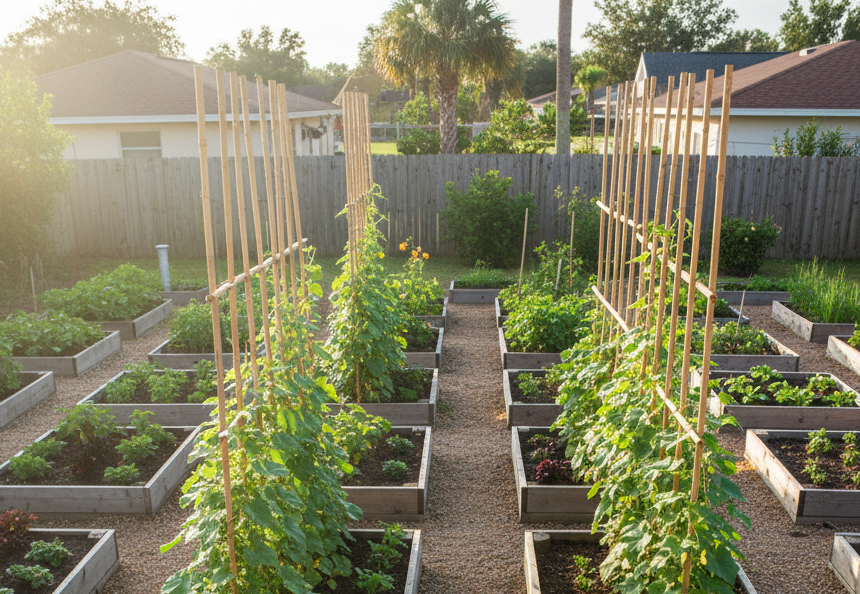
Why does seasonality matter?
Seasonality in Florida matters a lot more than you’d think. Although we don’t have issues with snow, inconsistent rainfall and heat plays a big role in what thrives and what dies. Some plants actually thrive in our more mild winter months. Once you start thinking seasonally, gardening becomes less about fighting the climate and more about working with it. The outcome? Bountiful harvests no matter the space you’re working with!
How store bought disconnects us from seasons.
One of the things I’ve noticed is how easy it is to lose touch with the seasons when everything is available all the time. You walk into a grocery store and you’ll find tomatoes, berries, herbs, and vegetables regardless of whether they’re actually growing locally. The issue with buying all our food from large grocery stores is that we lose touch with what food is seasonally available. Over time, we stop noticing what our area naturally produces and when.
My top 5 crops to grow each season for beginners in St Pete/Tampa:
Spring:
- Tomatoes
- Jalapeno and other peppers
- Parsley
- Basil
- Beans
Summer:
- Okra
- Sweet potato
- Rosemary
- Summer Thyme
- Oregano
Fall:
- Tomatoes
- Chives
- Eggplant
- Beans
- Seminole pumpkin
Winter:
- Carrots
- Kale
- Spinach
- Swiss chard
- Cilantro
The power of community growing and sharing.
When we start growing food locally and seasonally, even on a small scale, it allows us to connect with our community. A few backyard gardens won’t replace the grocery store, but a community of people growing, baking, making, and sharing locally creates something valuable: stronger relationships with the people around us.
Small seasonal gardens = big shift in our community.
 Growing Tampa Bay by Terralink
Leave a comment